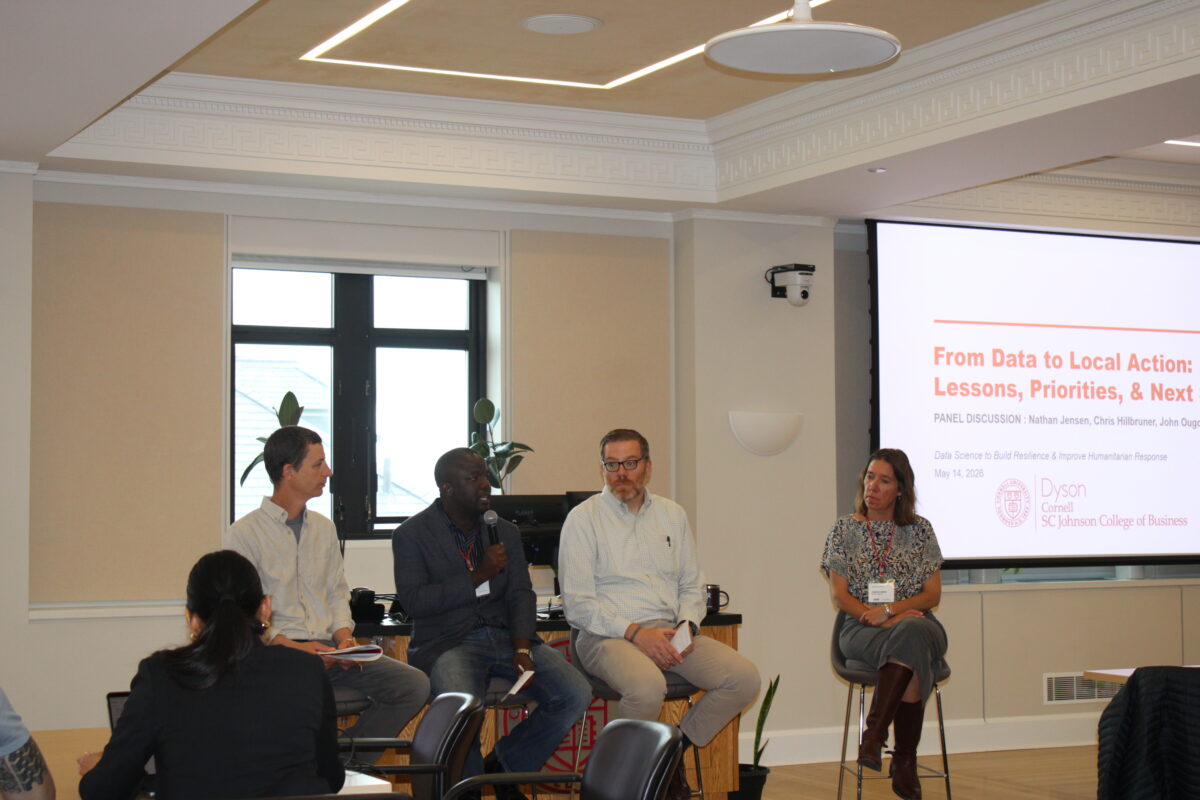
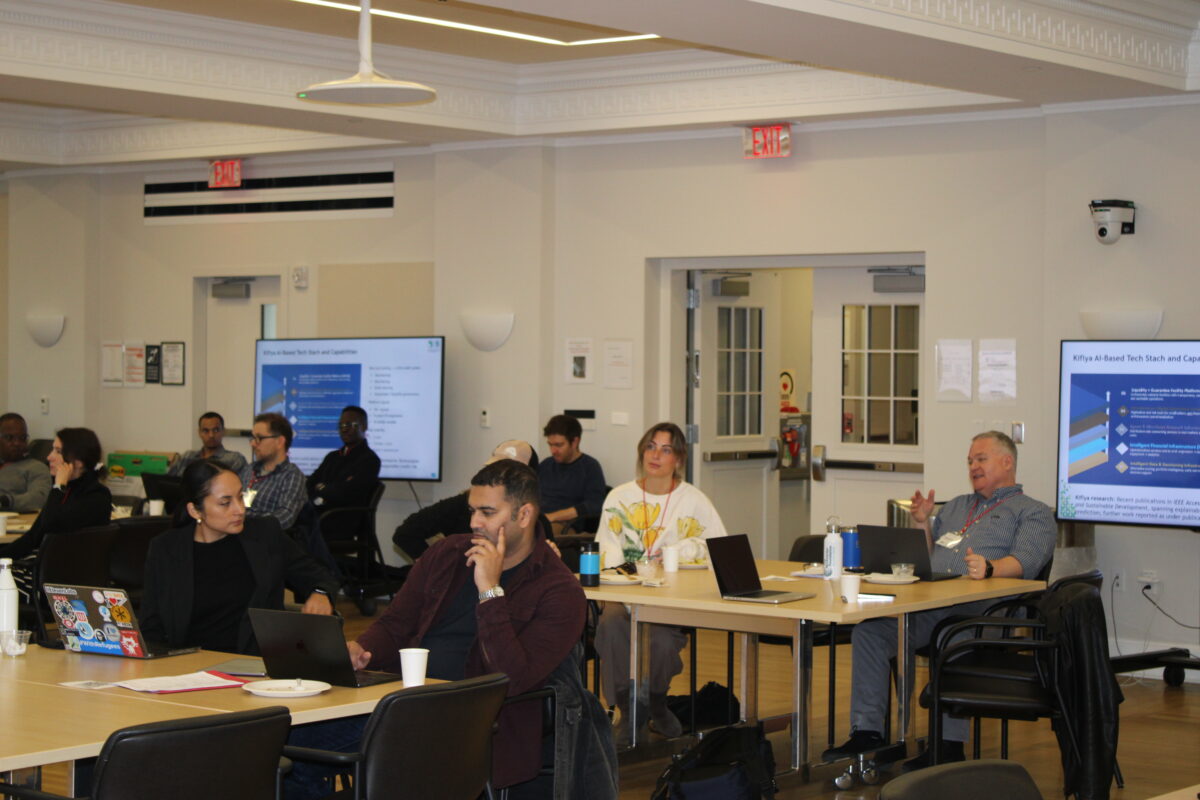
he Data Science to Build Resilience and Improve Humanitarian Response Thought Summit, held at Cornell in May 2026, convened researchers and humanitarian leaders from institutions including the World Bank, the World Food Programme, UNHCR, IFPRI, NASA JPL, and Kenya's National Drought Management Authority. Over five days, the summit explored how data science and AI can help predict, prevent, respond to, and accelerate recovery from crises in some of the world's most vulnerable regions, drawing on sources ranging from satellite imagery and weather forecasts to censuses, surveys, and community-generated data.
My role
- Synthesized attendee submissions into the pre-summit literature review, mapping the state of the field with a focus on data engineering methods and early warning system design. The review gave participants a shared foundation heading into the week's discussions.
- Served as a rapporteur throughout the summit, capturing the substance of talks, panels, and working sessions, and documented the event as a photographer.
- Co-authoring a white paper that charts the research frontier the summit opened, translating five days of discussion into a roadmap for future work in the field.